
Football IQ is not a feeling, a talent, or a gift. It is a specific set of cognitive skills. And every one of them can be trained and everyone can train them.
Ask most coaches or pundits what football IQ actually means and their answer will probably be pretty vague. Something about awareness, reading the game, or just knowing where to be. But, that isn’t good enough if you are serious about developing your football IQ. So, here is what Football IQ actually is.
What Football IQ Actually Is
Football IQ has four core components...
Scanning
Checking your surroundings before receiving the ball. Building and constantly updating a picture of what is around you. This is the foundation of every other core element.
Pattern recognition
Reading the game's shapes quickly. Knowing what a high press looks like before it fully arrives. Identifying a teammate's run because you have seen that movement many times and your brain has stored it.
Decision speed
Not just making the right decision, but making it fast enough to be useful. A pass chosen half a second too late is often worse than the wrong pass chosen on time.
Deception
Using your body, your eyes, your touch to mislead opponents. The fake pass. The disguised direction. This is where football IQ becomes an attacking weapon, as well as a defensive one.
Together, these four core components of football IQ produce what we call an “intelligent” or “smart player”. The one who always seems to have time on the ball. The one who was already in position before the move fully developed.

Why It Looks Natural But Isn't
The players who seem to have been born reading the game were not. They built that ability through training.
Professor Geir Jordet, co-founder of Be Your Best and the world's foremost academic researcher on visual perception in football, has spent two decades measuring how elite players gather and process spatial information before they receive the ball.
His findings are clear. Elite midfielders scan at roughly double the rate of average players before receiving the ball. Crucially, that scan rate is a trainable variable. It is not fixed at birth.
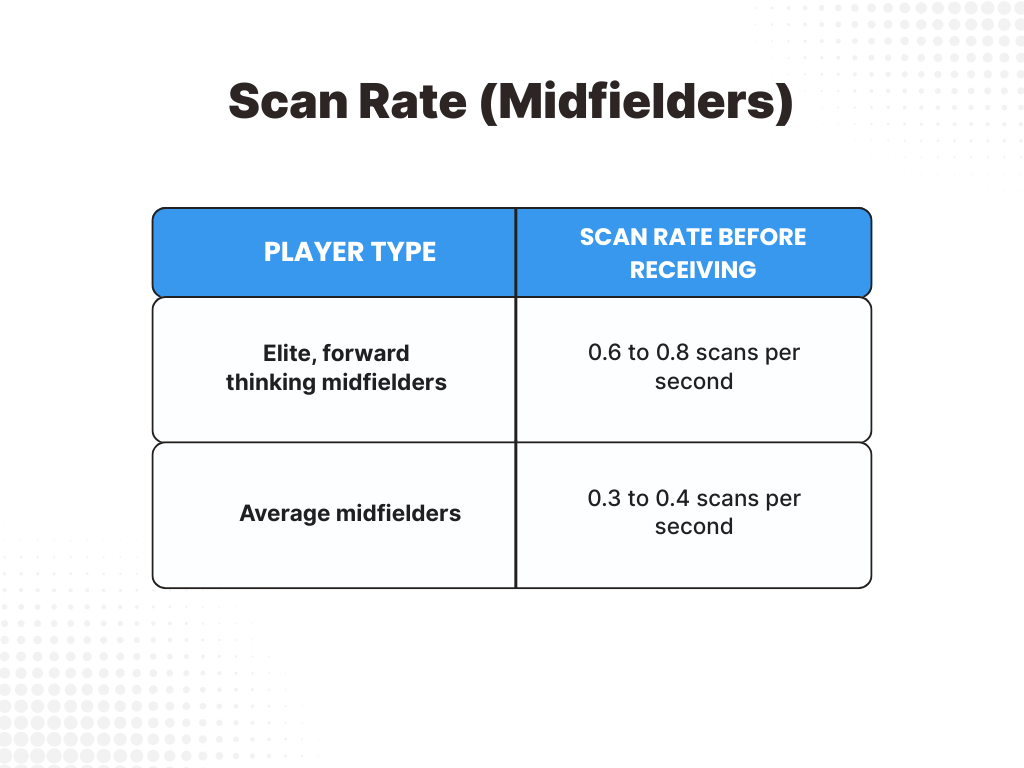
The brain builds habits through repetition. Scan before every touch, thousands of times, and eventually it stops being a conscious action. It becomes automatic. That automaticity is what makes elite players look like they have more time than everyone else. They do not have more time. They have more prepared information.
What It Looks Like in the Best Players
Martin Ødegaard
He's one of the clearest current examples of pre-reception scanning at the highest level. Watch him in the moments before he receives a pass. His head is on a swivel while the ball is still travelling. By the time it arrives he has already picked the best option available to him. He is not reacting to the game. He is ahead of it.
Aurelien Tchouameni
Demonstrates how scanning translates into press resistance. His decisions are made before the ball reaches him, which is why the press rarely catches him in possession. He has systematically trained his scanning since the age of eight and consistently ranks at the top of scanning datasets in La Liga.
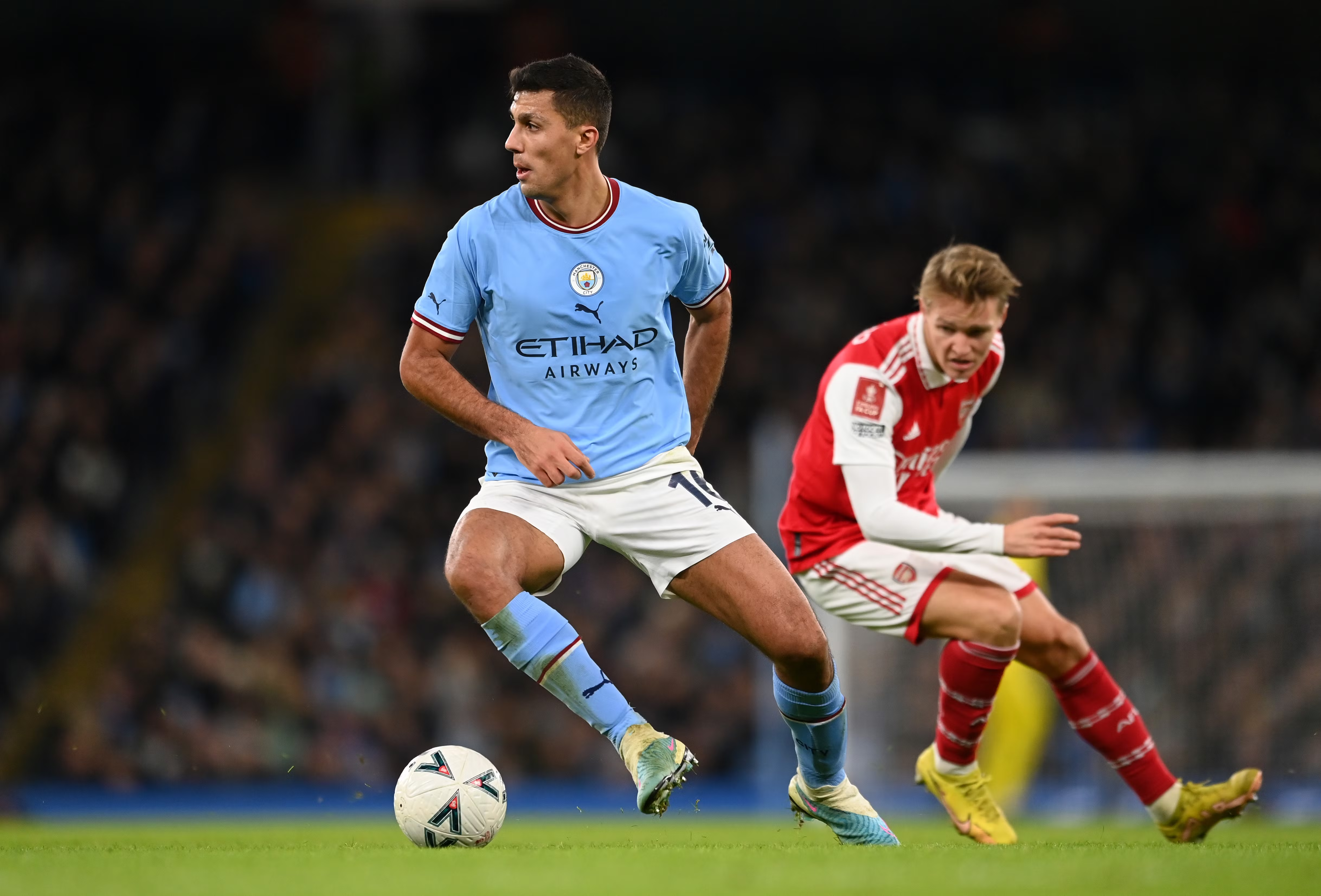
Rodri
Shows how football IQ operates defensively. His positioning is anticipatory rather than reactive. He intercepts passes that most holding midfielders would have reacted to too late, because he recognised the pattern of play before the ball was even played.
Why Pitch-side Training Alone Cannot Build Football IQ Fast Enough
Here is the problem with rondos, small-sided games, and most standard training drills: the cognitive demand becomes predictable.
The pressure comes from the same places. The shapes continue to repeat. The brain learns the pattern of the drill rather than the habit of scanning and deciding in genuinely unpredictable situations.
A player can look sharp in a rondo and still freeze under real match pressure, because the training never forced them to build the perceptual habit that actually matters.
Physical repetitions are also limited by fatigue, session length, and the number of touches a player gets in any given training block. Scanning is almost impossible to deliberately isolate on a pitch because so many other variables are happening at the same time.
To build football IQ at speed, you need a way to stack cognitive repetitions without those physical constraints.
How Be Your Best Builds Football IQ
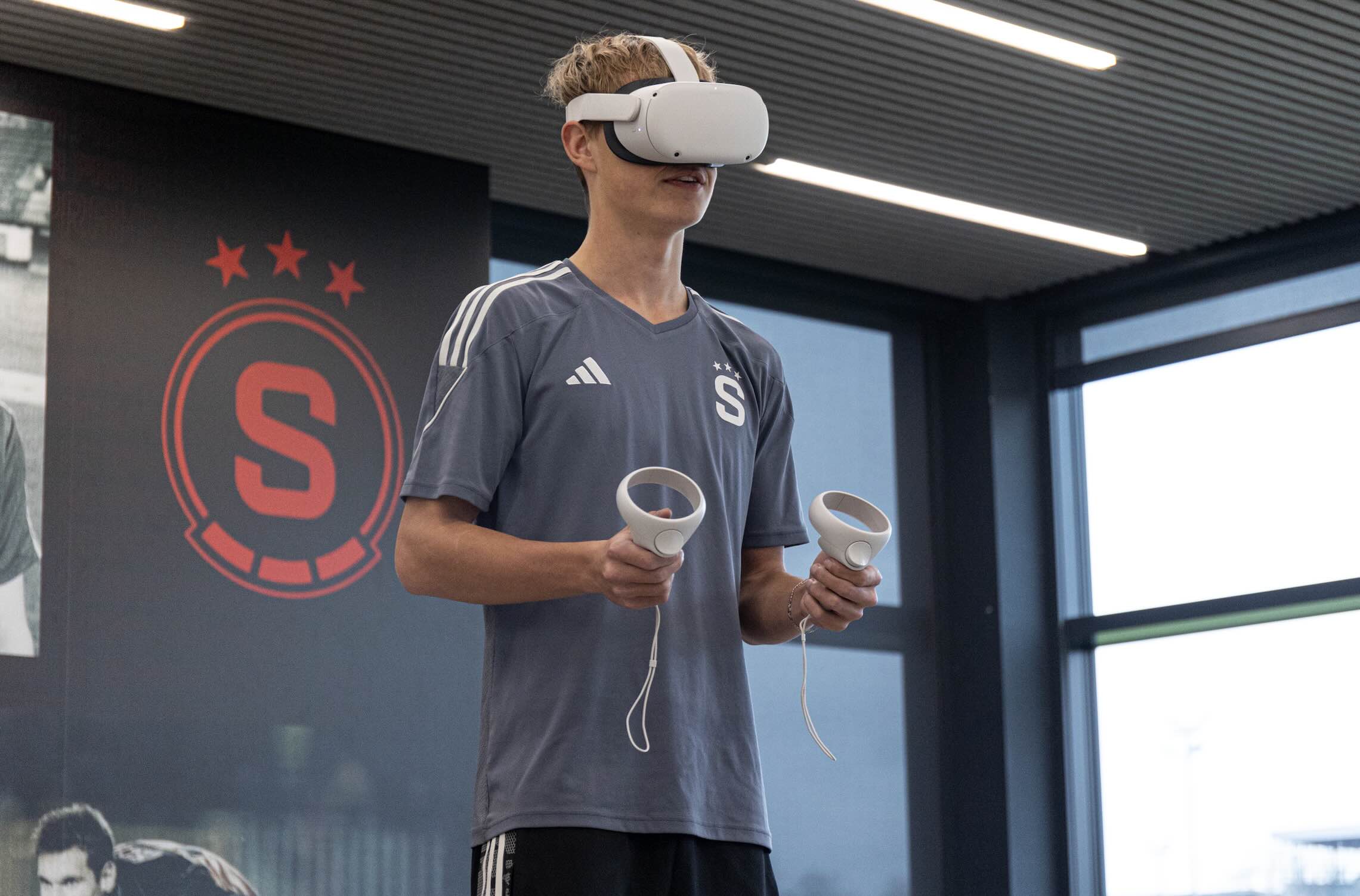
Be Your Best VR training is built around exactly this problem. Instead of rehearsing physical patterns, players repeatedly practise scanning, recognising pressure, and making decisions in match-realistic scenarios drawn from professional football.
Because physical fatigue is removed, the volume of cognitive repetitions in a single session is far higher than a standard training block can offer. Every decision is recorded and tracked, so progress is measurable in a way pitch-side training cannot match.
Be Your Best explicitly trains:
Scan rate
How often you visually gather information before receiving the ball
Scan timing
When those scans happen in relation to the ball's movement
Critical scans
The final check in the last moment before the ball arrives
Decision readiness under pressure
Committing to the right action before the press can force an error
Three to five short sessions per week is enough to start seeing measurable improvement in scan rate and decision speed. Football IQ is trainable. The question is whether you are training it deliberately.
Frequently Asked Questions
Q: What is football IQ in simple terms?
Football IQ is a player's ability to read the game, process information quickly, make smart decisions under pressure, and anticipate what is about to happen before it does. It covers scanning, pattern recognition, decision speed, and deception.
Q: Is football IQ something you are born with?
No. It is built through repetition. The scanning and decision-making habits that look natural at the elite level were constructed over thousands of hours of cognitive training.
Q: How can I improve my football IQ?
Increase your scanning frequency, improve your scan timing, and practise making decisions before receiving the ball. Consistent repetition in realistic scenarios accelerates this more than physical drilling alone. Be Your Best VR training is built specifically to stack these cognitive repetitions.
Q: How long does it take to improve football IQ?
Player feedback and internal studies show measurable improvements in scan rate and decision quality within weeks of consistent VR training. Building the deep automaticity that elite players demonstrate takes longer, but the trajectory is trackable from early on.
Q: What is the difference between football IQ and technique?
Technique is the physical execution of a skill: the pass, the touch, the finish. Football IQ is the cognitive process that determines what to do and when. A player can have excellent technique and poor football IQ. The best players have both, but it is football IQ that separates good players from smart ones.
Q: What equipment do I need to get started?
Be Your Best is compatible with Meta Quest 2, 3, 3s, and Pro headsets.
.jpg)

.jpg)


