
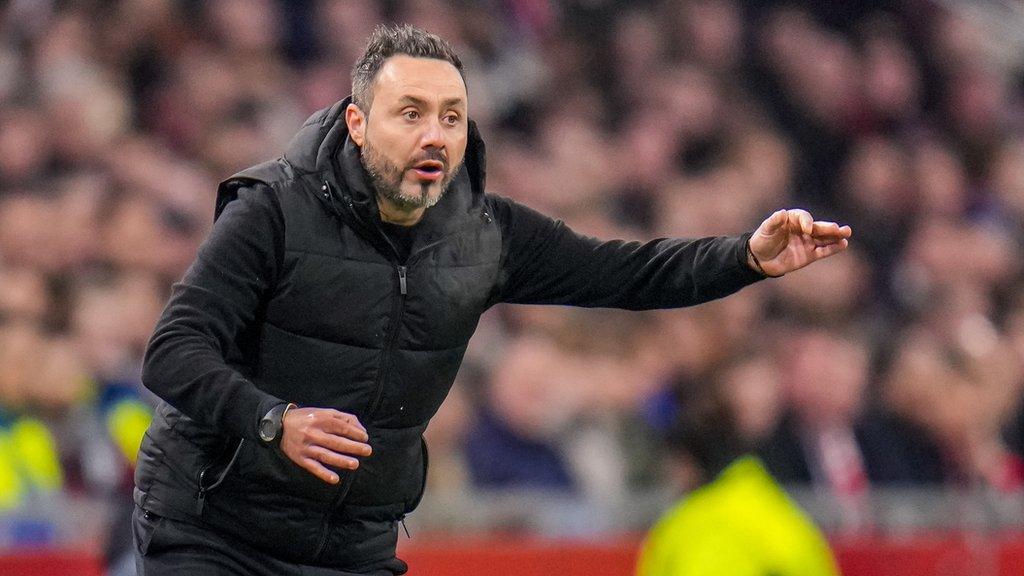
Roberto De Zerbi's teams do something most don’t. When a centre-back receives the ball under pressure, they do not immediately clear or recycle the ball. They put their foot on it and wait. They hold still, let the opposition press step toward them, and play through into the space that opens up behind. They bait the press.
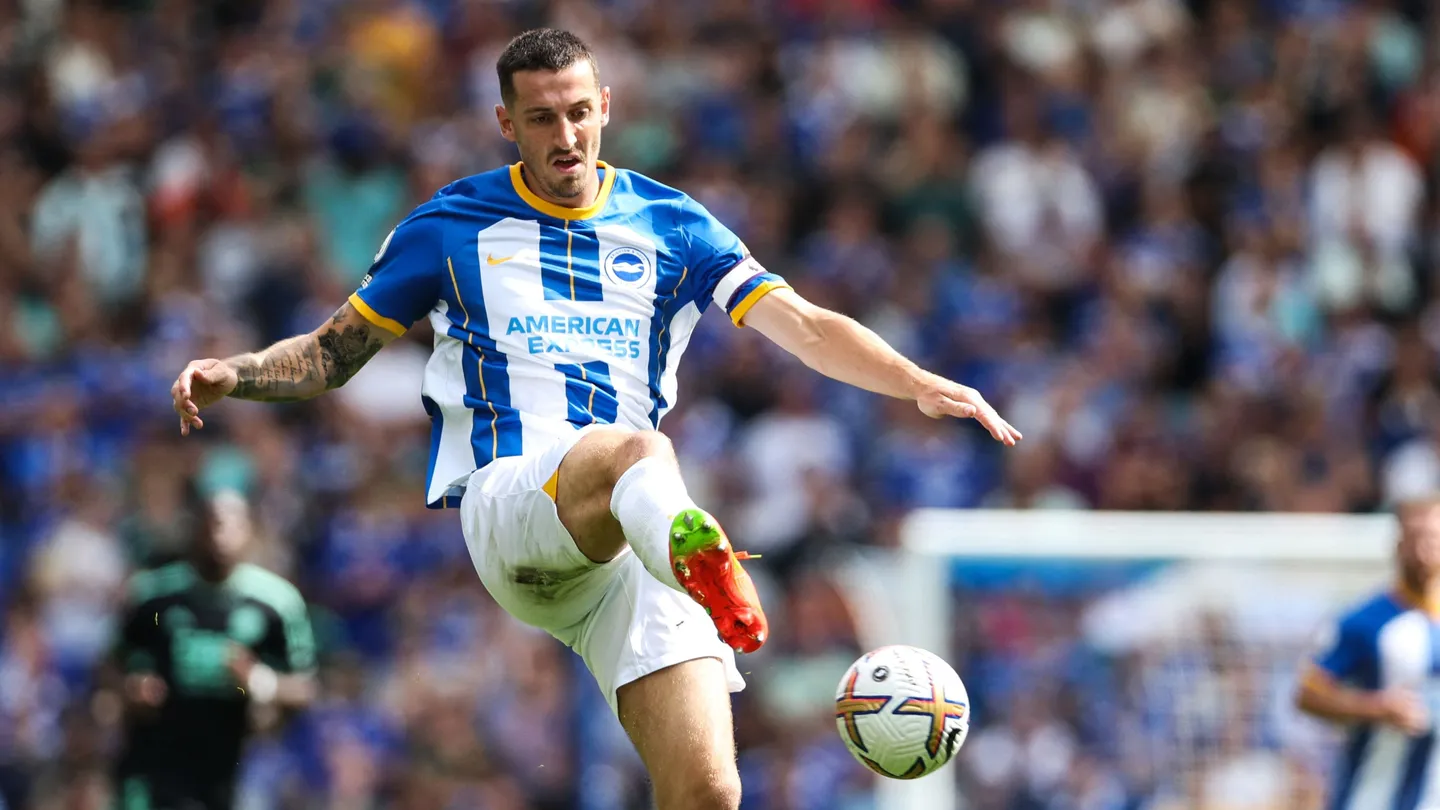
The move looks like composure but it is actually something more specific than that. Lewis Dunk, the captain who marshalled Brighton's defence for De Zerbi, explained what it actually took to learn.
"We rehearse it every day. That is our training. I couldn't play his position, but now I know every position on the pitch and where they should be. The time they should move and what angles they should give. So yes, we see it every day and it makes life simpler."
He is not describing a shape or a pattern. He is describing getting to a place where a decision can already be made before the opposition's pressure arrives. Lewis Dunk is describing how De Zerbi’s coaching actively improves the football IQ of his players.
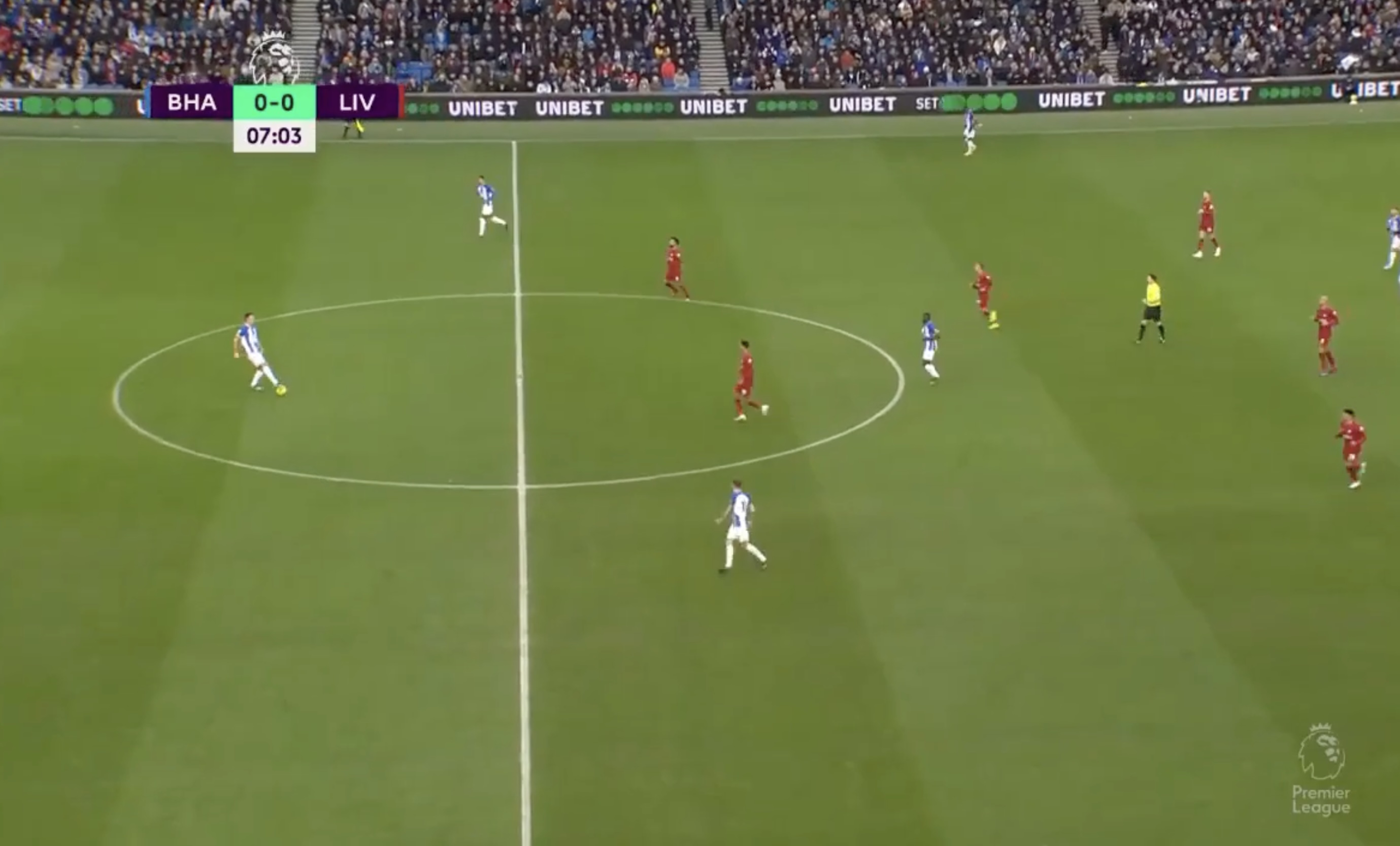
That is why De Zerbi's teams are so difficult to press.
While the tactical principles appear simple on the surface, they rely on something many coaches overlook: the ability of players to gather information before the ball arrives.
Understanding how De Zerbi's teams bait and beat the press provides a useful case study in how scanning, awareness and decision-making influence performance at the highest level.
What Does De Zerbi Actually Do? And What is Press Baiting?
Most teams try to avoid the press. De Zerbi's teams invite it.
This tactical approach has a name: press baiting. A deep lying player receives the ball and pauses, foot on the ball, still. This can be a defender, deep midfielder or even the goalkeeper.
This action draws the opposition forward. When a rival striker or midfielder steps to press, they move out of their defensive shape. Space opens behind them. De Zerbi's team plays into that space before the press can recover.
The critical point is that this is not reactive. The player on the ball is not waiting to see what happens. They already know. They have scanned before the press arrived, identified where the space will open, and made the best decision. The pause is a trigger, not hesitation.
That is what the system actually requires. Not just composure but a pre-built picture of the pitch, constructed before the pressure reaches the player on the ball.
Why Are De Zerbi’s Tactics So Hard to Learn?
You do not lose the ball in a De Zerbi system because the press is too aggressive. You lose it because you are working with outdated information.
When you place your foot on the ball with a striker closing, most players will rush their decision. They take the safe touch, recycle backwards, break the pattern. The press wins without making a tackle.
Now watch Lewis Dunk at Brighton, Ødegaard at Arsenal or Tchouameni at Real Madrid in the same kind of situation. The ball is moving before the pressure fully arrives. Not because they are calmer by nature. It is because they already knew where it was going, having scanned in the time before the ball arrived.
Professor Geir Jordet, co-founder of Be Your Best and the leading academic researcher on visual perception in football, has spent two decades measuring exactly this. His research shows that the best players look at the game while others look at the ball, scanning between touches to gather the information that less aware players miss entirely.
A player who has scanned can pause, let the press commit, and play through it. A player who has not will always be reacting too late.
.png)
Why Is De Zerbi's Football So Difficult To Implement?
The last time we saw his football in the Premier League, De Zerbi had a full pre-season at Brighton. Multiple cycles. Gradual implementation. The habits were built over months of daily repetition, exactly as Dunk described.
The challenge with implementing De Zerbi's football is not tactical understanding. It is repetition.
His teams rely on players being comfortable receiving the ball under pressure, attracting opponents, and playing through the space that opens behind them.
These behaviours are not developed overnight. They require hundreds of repetitions of scanning, positioning and decision-making until the actions become automatic.
This is why De Zerbi's methods often look most effective after a full pre-season, where players have time to build the awareness and habits the system demands.
This is where VR Football Training could make all the difference.
.png)
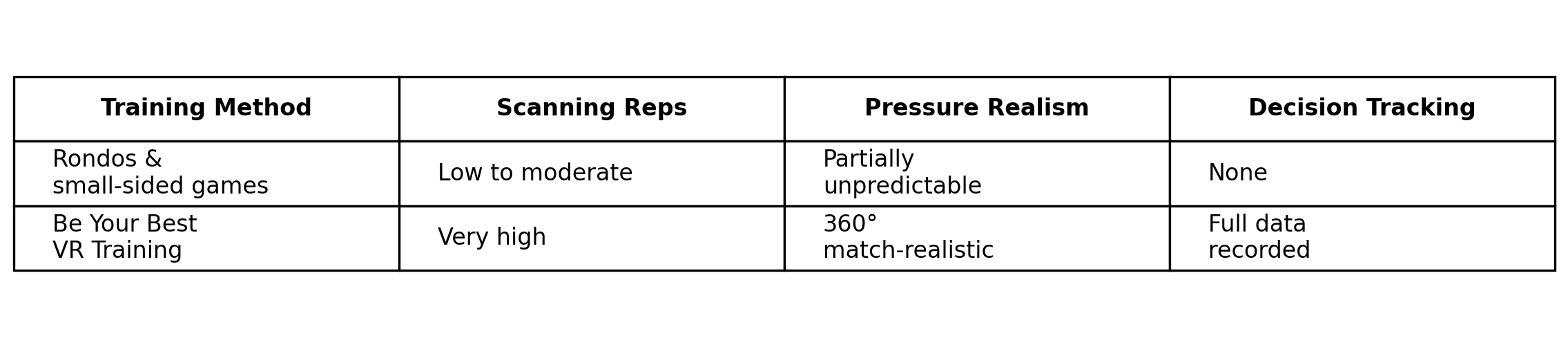
You see, the brain adapts to predictable environments. In a rondo, the press comes from the same place every time. Players read the pattern and stop scanning. The cognitive demand drops. The habit does not form.
Using a Meta Quest headset, players face first-person match scenarios that recreate the pressure situations De Zerbi's system demands, with no physical output. A player can rehearse the pause, the scan, the decision, hundreds of times in a single session. Every decision is recorded.
Tchouameni used Be Your Best to prepare for a game against Osasuna in 2023, training in VR from his own living room to rehearse a position he had never played - demonstrating exactly how the platform accelerates the building of positional awareness and decision-making under pressure.
The same principle applies here: high-volume cognitive reps, no physical cost, trackable progress.
It’s all about Thinking Ahead
A team that can pause under pressure, having already decided where to play the next pass, makes the press look ineffective.
The players who execute these moments successfully have already built a mental picture of the pitch before the pressure arrives.
That is not simply a technical skill. It is a cognitive one.
Whether through traditional coaching or modern tools such as VR football training, the ability to scan, anticipate and make better decisions can be developed.
And that is perhaps the most important lesson from Roberto De Zerbi's football: the best decisions are often made before the ball arrives.
Frequently Asked Questions
Q: What is press baiting in De Zerbi's system?
A centre-back or midfielder receives the ball, places their foot on it, and pauses. The stillness draws the press. When the opposition commits and steps forward, space opens behind them. The pass was already decided.
Q: Why is press baiting more demanding than standard possession football?
The decision has to be made before the press arrives, which means before the picture is obvious. That requires scanning in the seconds before receiving, so the choice is already committed to when the ball arrives.
Q: What is scanning and why does it matter in football?
Checking your surroundings before the ball reaches you. Elite midfielders do it 6 to 8 times per 10 seconds; average players 3 to 4. That difference is what separates players who can execute the pausa from those who panic under it.
Q: Can scanning habits realistically be built mid-season?
Not through conventional training alone. The physical load constraints and fixture schedule make the required volume of reps almost impossible to reach safely. VR training addresses that directly.
Q: How does Be Your Best VR training help footballers improve?
Players face match-realistic press scenarios at high volume with no physical cost, using a Meta Quest headset. Every decision is recorded and tracked. Tottenham have a dedicated facility at Hotspur Way built for exactly this kind of cognitive training.
.jpg)

.jpg)


