
.jpg)
Modern football is no longer defined by physical, technical or tactical ability alone.
At the highest level, the game is faster, more compact, and more cognitively demanding than ever. Players have less time to receive, less space to operate, and more pressure around every action.
That makes one skill increasingly important:
The ability to collect information before the ball arrives.
Scanning, awareness and decision-making are no longer “nice to have” qualities. They are core parts of elite player development.
A recent case study conducted in collaboration with the Right to Dream network explored whether these cognitive behaviours can be trained and measured through Be Your Best.
The findings suggest they can.
The purpose of the case study
The study was designed to examine how consistent cognitive training with Be Your Best could influence key in-game behaviours linked to scanning, awareness and decision-making.
The study compared players using Be Your Best against a control group operating under the same conditions.
The project was structured to isolate cognitive performance indicators by keeping opponent level, positional roles, match intervals and analysis procedures consistent throughout the study.
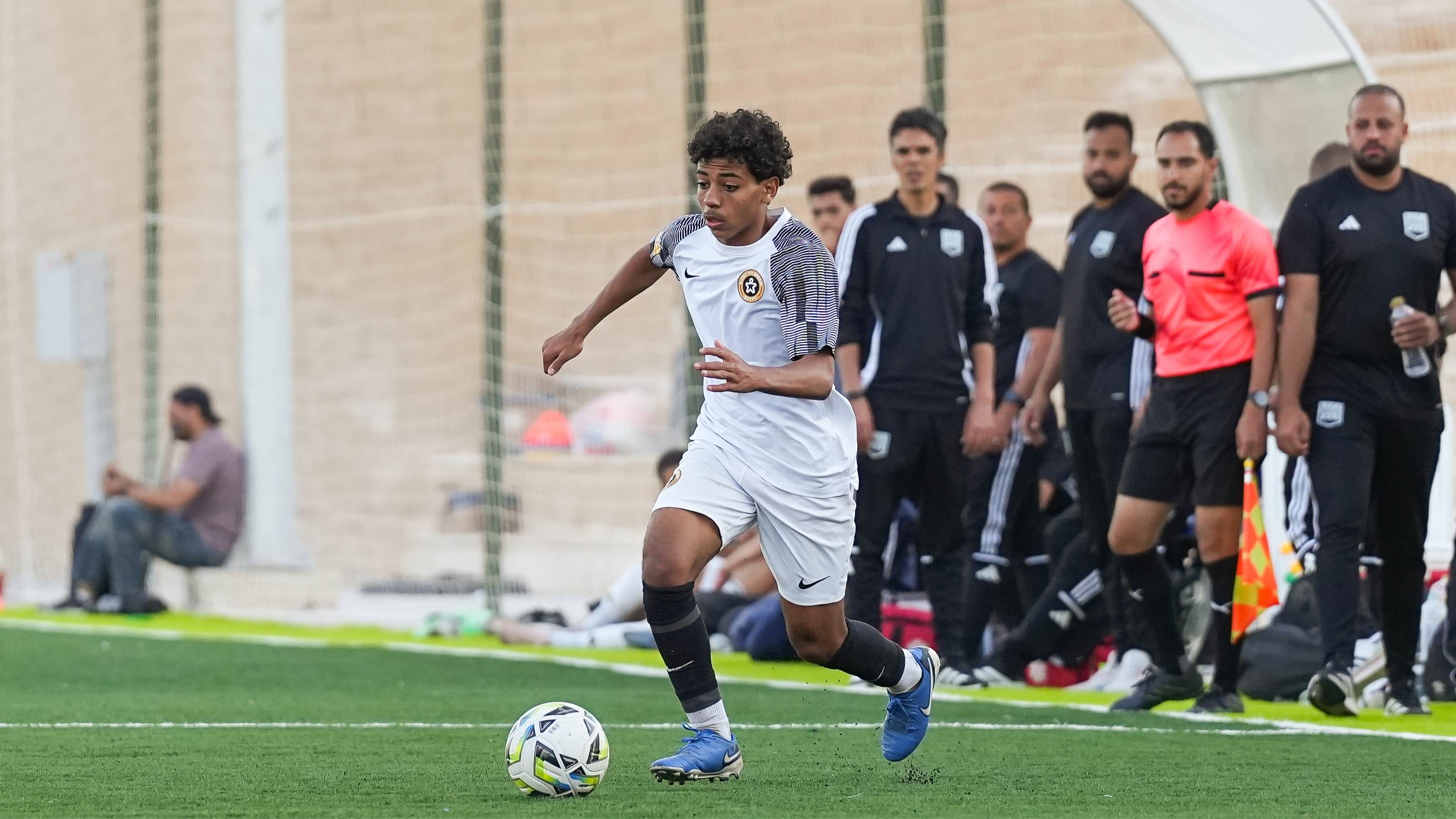
Across the 2024/25 season, six U-15 elite youth academy players were analysed across six competitive fixtures against elite opposition.
Using detailed SportsCode analysis, the study tracked performance indicators including scan frequency, critical scan timing, awareness behaviours and decision quality under pressure.
What was measured?
The analysis focused on behaviours that are closely linked to game intelligence.
These included:
Scan frequency
How often players checked their surroundings during key moments.
Offensive scanning
How often players gathered information when their team had the ball.
Defensive scanning
How often players checked information when defending, tracking opponents and managing space.
Critical scan frequency
The final visual check a player makes while the ball is travelling towards them.
This last detail is especially important. The critical scan is often the moment that shapes the next action: first touch, body orientation, decision speed and execution quality.
The Results
The Right to Dream Egypt players using Be Your Best showed clear improvements across several scanning behaviours.
.jpg)
The BYB-trained group improved:
Offensive scanning: +17%
Defensive scanning: +65%
Overall scan rate: +57%
Critical scan frequency: +21%
Decision Quality +18%
Execution Quality +69%
The improvement in overall scan rate measured how consistently players scanned in the crucial moments before receiving the ball.
One of the most significant findings was the improvement in critical scan frequency. Players using Be Your Best improved this behaviour by more than 21%, while the control group improved by 3%.
That matters because scanning is not just about looking around more often.
It is about checking at the right moment, collecting useful information, and using that information to make better decisions under pressure.
Why this matters for player development
For a long time, scanning and awareness have been treated as natural qualities. Some players are described as “intelligent.” Some are said to “see the game.” Some appear to have more time than others.
But the important question is whether these behaviours can be trained.
This case study supports the idea that cognitive behaviours such as scanning, awareness and information gathering can improve through consistent training.
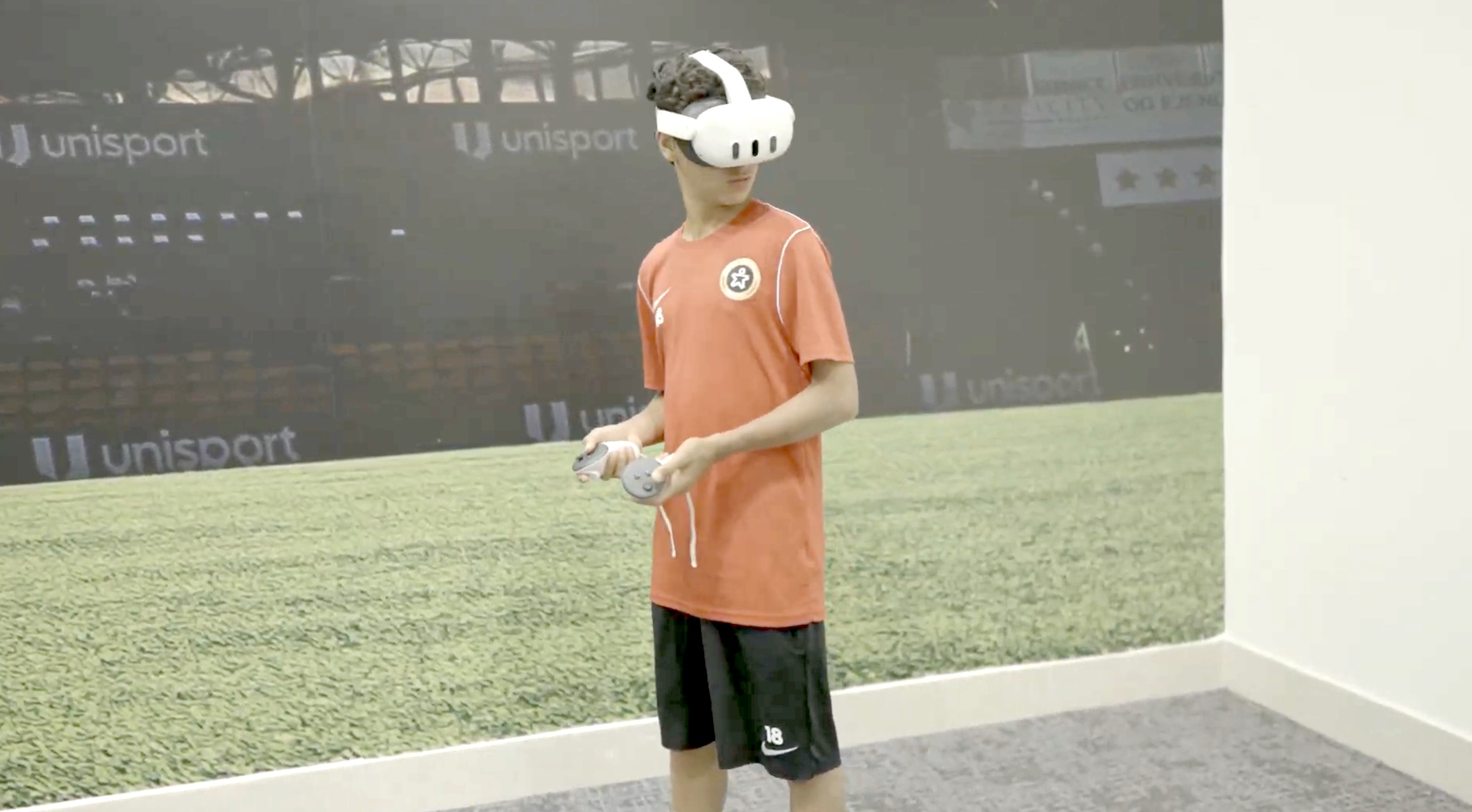
Be Your Best uses realistic match scenarios delivered through Meta headsets, allowing players to train in environments designed to replicate the speed and pressure of elite football.
The benefit is not just repetition. It is repetition of the right kind of decision.
Players are placed in match-realistic scenarios where they need to scan, process information, make decisions and respond quickly - without the physical load of a full on-pitch session.
.jpg)
Why controlled conditions matter
One of the most important parts of the study was the structure.
The analysis was designed to reduce outside influences and make the comparison as fair as possible.
Players were assessed across identical match periods to account for fatigue, and all data was independently analysed by the same three analysts to ensure consistency and reduce individual bias.
That matters because player development is complex. Performance can be influenced by opponent quality, match context, fatigue, coaching, position, playing style and many other factors.
By controlling for these variables as much as possible, the case study provides a clearer view of how cognitive training may influence specific behaviours on the pitch.
From physical training to cognitive training
Football development has traditionally focused on technical, tactical and physical work. That will always matter.
But the modern game also demands players who can process information faster, recognise pressure earlier and make better decisions before the ball arrives.
As Be Your Best CEO Andreas Olsen put it, football at the highest level is increasingly defined by decision-making speed, awareness and the ability to process information under pressure.
These are trainable skills, and the study showed meaningful behavioural improvements when players worked on them consistently. This is where cognitive training can become a meaningful addition to elite development environments.
Not as a replacement for on-pitch training. But as a way to give players more high-quality repetitions of the moments that shape performance.
.jpg)
Supporting Right to Dream Egypt
The case study forms part of Be Your Best’s wider partnership with Right to Dream Egypt, which will give up to 60 student-athletes access to Be Your Best’s immersive VR training platform.
For players in an elite development environment, this creates another layer of training.
They can work on scanning, awareness and decision-making away from the pitch, then bring those behaviours back into real match situations.
The bigger takeaway
The future of football development will not only be about training harder. It will be about training smarter.
Players need to improve how they move, pass, finish, defend and compete physically. But they also need to improve how they see. The game often starts before the ball arrives.
And this case study shows that with the right training environment, the behaviours that help players see the game earlier can be developed, measured and improved.
If you're a player, parent, coach, or anyone looking to try out the same training as Right to Dream, you can purchase a Be Your Best subscription through our website, or email contact@beyourbest.com to make an enquiry.

.jpg)


