
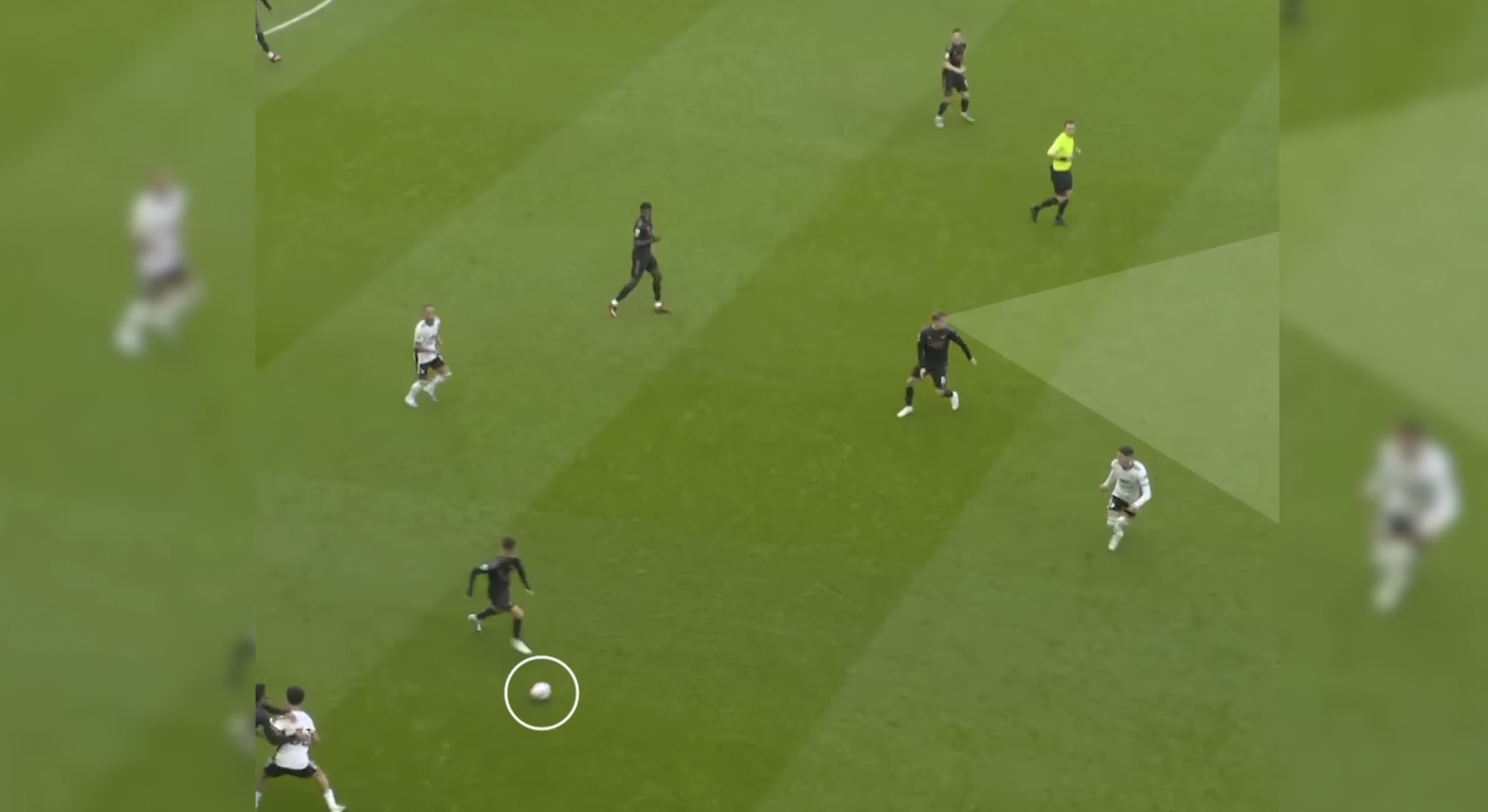
To really understand what football IQ looks like in practice, watch Martin Ødegaard play in midfield. He creates time on the ball because he decides what he will do before he receives the pass, making choices earlier than almost every other player on the pitch. That fraction of a second is what gives him space and control when there appears to be none.
The problem for most players is not that they make bad decisions. They just make them too late.
Why Is Martin Ødegaard's Football IQ So High?
Ødegaard plays proactively, not reactively. Most players receive the ball, look up, decide, then act. Elite midfielders scan the pitch, decide, receive the ball, then act. That order of operations changes everything.
Watch him specifically in the moments just before he receives a pass. While the ball is travelling, his head is already moving. Not frantically, not obviously, but with a quiet deliberateness that most players never develop. By the time the ball arrives he has already dismissed two options and settled on a third.
Pre-reception awareness like this reduces cognitive load under pressure because the brain is updating an existing picture rather than building a new one from scratch. That is why he so rarely looks hurried even when the space around him is tight.
What Does the Research Actually Show?
Professor Geir Jordet of the Norwegian School of Sport Sciences has spent years researching visual attention and scanning behaviour in elite football. His work puts concrete numbers to what we can observe with our eyes.
Higher scan rates correlate directly with higher forward-pass completion. The most important implication of Jordet's research is this: scanning frequency is a trainable variable, not a fixed talent.
What Does Football Scanning Actually Look Like?
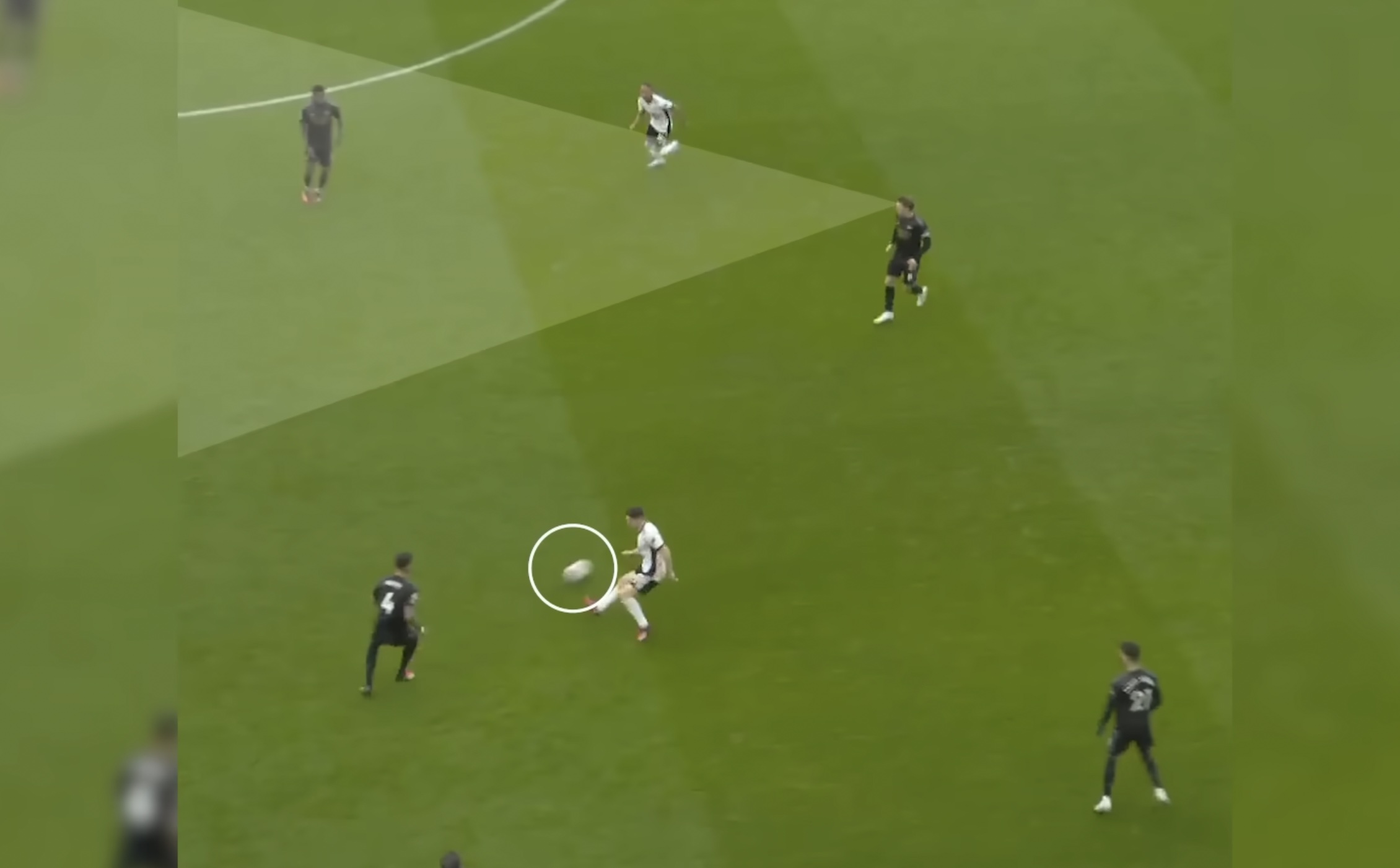
Look at Ødegaard in this situation. There's a teammate to his right but also an opponent approaching from the same side. Most average players would focus on controlling the ball here, but Ødegaard has already registered the pressure. Because of that late scan, he can turn the other way with confidence.
Scanning too early gives you outdated information. Scanning too late forces a rushed decision. The goal is a continuously updated mental picture of what is around you.
Why Do Traditional Drills Fall Short?
Watch a good player in a rondo. You'll see that their touch is often tidy, the pass is crisp, they can move the ball with one and two touches. Everything appears comfortable.
But when you add more players into the mix, add pressure from all angles, and the obvious pass disappears, the rhythm changes. Many players take an extra touch to buy time, look up, and either force a pass or recycle the ball backwards. The issue isn’t technique. It’s that they received the ball without a clear picture of their surroundings.
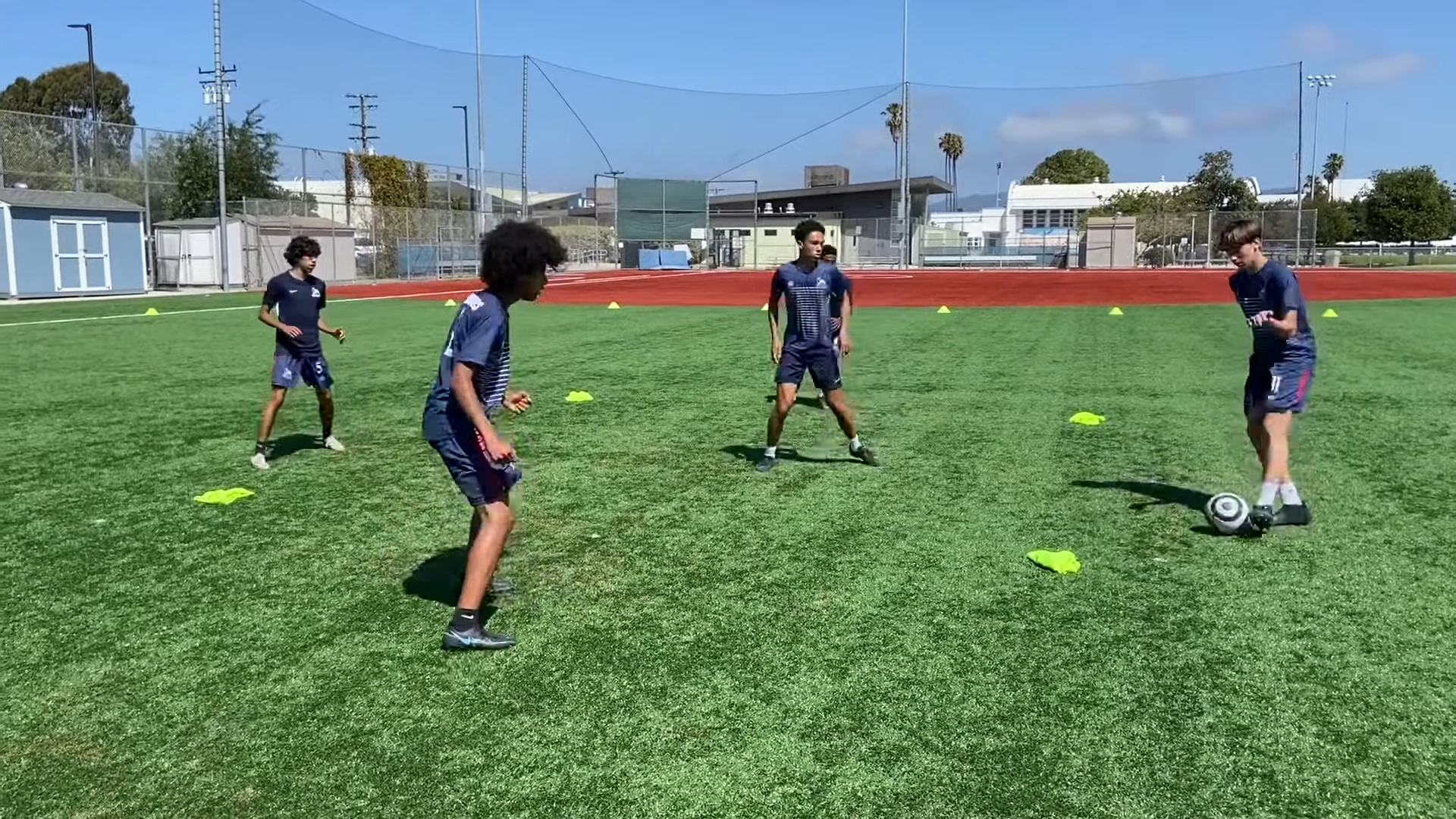
The rondo never forced them to build that mental picture. The defenders were visible the whole time. The pressure was always coming from the same two spots. The brain learned the pattern and stopped scanning.
Cones and small-sided games have the same structural problem: the cognitive demand is predictable enough that a player can perform well without ever training the perceptual habit that actually matters. If scanning is not the thing the drill demands, it is not the thing that improves.
How Does VR Football Training Build These Habits?
Be Your Best VR football training focuses on the cognitive side of performance. Instead of rehearsing physical patterns, players repeatedly practise pre-reception scanning, recognising pressure in match-realistic scenarios drawn from professional football.
Because physical fatigue is removed, the volume of cognitive repetitions increases significantly. Every decision is recorded, so performance is tracked over time in a way that a standard session simply cannot offer. Neuroplasticity does the rest. Repeated exposure to fast-paced decision scenarios strengthens the relevant brain pathways until the right behaviours become automatic.
Train the behaviour. Reinforce the pathway. Build automaticity.
The Cognitive Edge: How to Start
- Start scanning today. Count how many times you check your shoulder before each touch in your next session. If the answer is zero or one, you have found the gap.
- Use VR to accelerate. Three to five sessions per week, five to ten minutes each, with gradually increasing scenario complexity. This is where scanning shifts from conscious effort to automatic habit.
- Measure your progress. Be Your Best's in-app tracking monitors decision accuracy and reaction consistency over time. What gets measured gets improved.
Football is getting faster and space is tighter at every level. The players who spot solutions earliest make the difference.
Frequently Asked Questions
Q: How do I improve my football IQ? A: Increase scanning frequency, improve scan timing, and practise making decisions before receiving the ball. Consistent repetition in realistic scenarios accelerates this more than physical drilling alone.
Q: Can VR improve football decision-making? A: Yes. Virtual reality presents repeated match-realistic scenarios requiring fast visual processing and decision selection. It works best alongside on-field training, not as a replacement for it.
Q: How often should I train scanning? A: Three to five short sessions per week builds consistent habits. Regularity matters more than session length.
Q: What makes Ødegaard's decision-making elite? A: Frequent pre-reception scanning, early information gathering, and quick decision commitment allow him to act immediately under pressure rather than reacting after the fact.
Q: What VR headset do I need? A: Be Your Best is compatible with Meta Quest headsets including the Meta Quest 2, 3, 3s, and Pro.
.jpg)

.jpg)


