
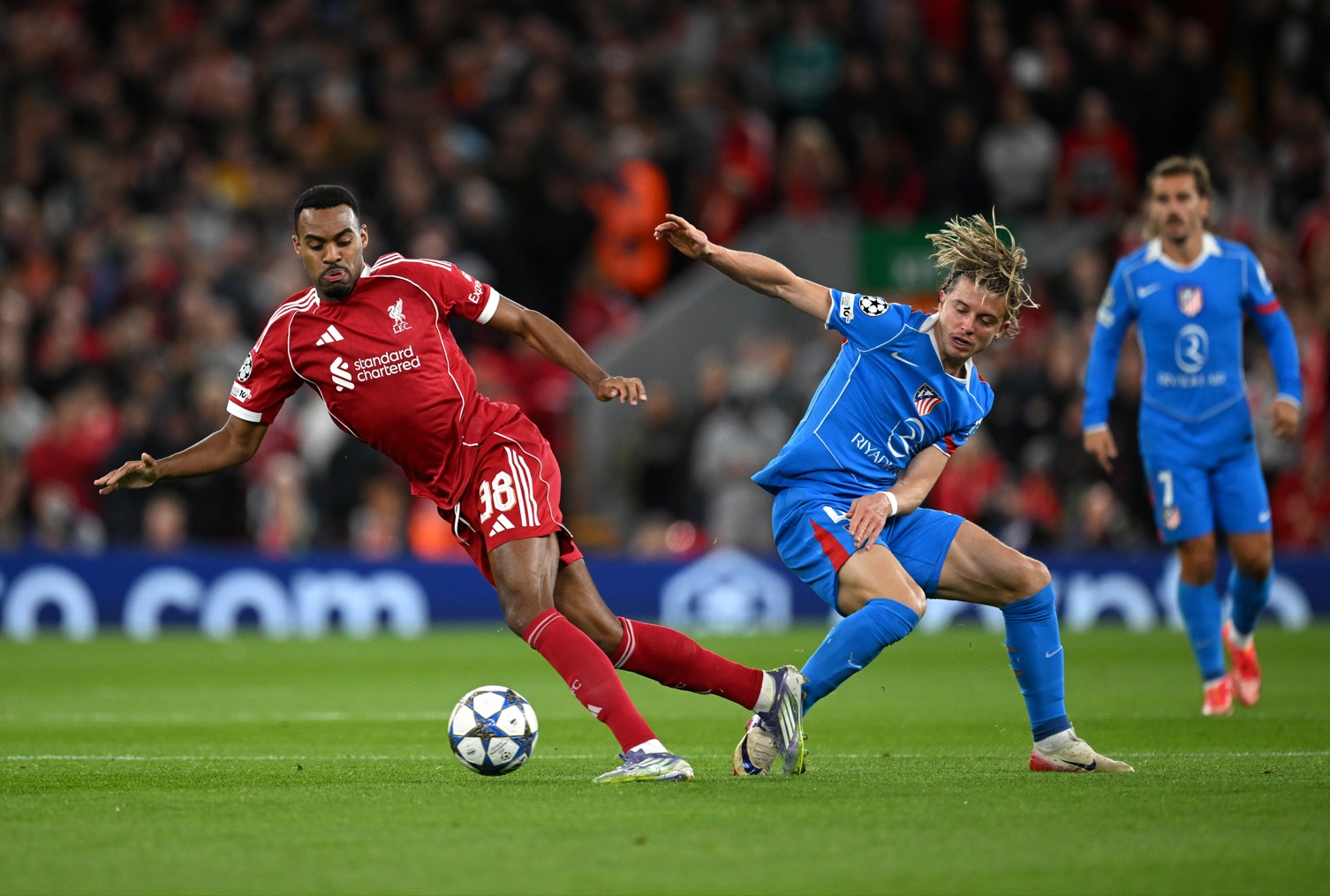
The most important habit of press-resistant midfielders is scanning. Repeatedly checking their surroundings before receiving the ball.
The best football players build a mental map of the pitch between touches, deciding what to do before the ball arrives. Nowhere is this more demanded, or more visible, than in midfield.
Picture the scene. A defender passes into the midfield, a press is triggered, and the receiving midfielder has a moment to decide. Most players are already too late to choose their next move because they watched the ball for too long. By the time it arrives at their foot, their mental picture of the match is obsolete.
.jpg)
Now watch an elite midfielder like Aurélien Tchouameni, Martin Ødegaard or Cole Palmer. One habit underpins their press resistance: decisions are made before the ball even reaches them. The pass is away, the press beaten before it fully materialises. They didn't react faster than those around them. They could see their options sooner.
That advantage comes down to one thing: scanning.
Professor Geir Jordet, whose research has shaped how elite clubs from Arsenal to Hoffenheim approach cognitive training, puts it plainly: "The best players look at the game; others look at the ball. Elite players scan between touches. Between touches, nothing new happens with the ball, so they look at other events."
That window is where football IQ is built or lost, because the brain can be trained to perceive visual cues faster. That is neuroplasticity at work.
Why Do Midfielders Lose the Ball Under Pressure?
You don’t lose the ball because the press is too aggressive. You lose it because you are working with outdated information. While tracking the ball from a teammate’s foot to your own, you receive it with a mental picture of the game that is out of date.
By then, the open channel has closed, and a defender has stepped in to make the tackle.
.jpg)
The players who consistently beat the press are not necessarily faster; they act earlier. They build their picture of the game while the ball is travelling towards them. This proactive approach leverages the brain’s neuroplasticity to turn information gathering into a subconscious reflex, ensuring the decision is already made before the first touch.
The First Touch is a Decision
Your first touch is the execution of a plan built in the seconds before contact. Jordet’s research identifies a specific "scanning rhythm": look at the ball when a teammate touches it and look away between touches.
When you get this right, the touch becomes almost secondary because the hard cognitive work happened before the ball reached you.
Aurelien Tchouameni famously used this cognitive preparation to "pre-live" match scenarios before games. By training in VR with Be Your Best, he reinforced the scan timing needed to read pressure from a 360-degree perspective, making his decisions on the pitch appear instinctive rather than rushed.
What Does the Data Say About Elite Scanning?
The difference between midfielders who beat the press and those who get caught is measurable. Jordet’s research across the Premier League analysed 1,118 game situations and found a concrete link between scanning and performance:
.jpg)
High Scanners: (e.g., Ødegaard, Tchouameni): 83%+ Pass Completion
- Scanning Frequency: 0.4 to 0.6 scans per second (6–8 times per 10-second window).
- Impact: Superior awareness of progressive lanes and open teammates.
Medium Scanners: 70% – 78% Pass Completion
- Scanning Frequency: ~3–4 scans per 10 seconds.
- Impact: Standard top-flight level; competent but lacks elite environmental awareness.
Low Scanners: <60% Pass Completion
- Scanning Frequency: Minimal to no scanning before reception
- Impact: Highly vulnerable to blind-side presses and significantly lower accuracy on forward passes.
The more players scan prior to reception, the more likely they are to play a successful pass. This is why high-IQ players like Tchouameni, who has systematically trained his scanning since age eight, consistently rank at the top of these datasets.
Why Are These Habits Hard to Build in Standard Training?
Standard drills like rondos often fail to build real football IQ because the pressure is predictable. The brain stops scanning once it learns that the environment is a fixed pattern. To play like the pros, you need training that mirrors the 360-degree unpredictability of a real match.
How to Train Your Brain to Beat the Press
Building elite scanning habits requires three specific behaviours:
- The Arrival Scan: Look away prior to your teammate passing the ball towards you to gather data on the space.
- The Critical Scan: Perform a final check 0.5 seconds before reception, which is the most valuable scan a midfielder can do.
- Open Body Orientation: Position your hips to give your eyes the widest possible view before the ball arrives.
A 2025 trial published in BMC Sports Science found that seven weeks of VR cognitive training significantly improved scanning behaviour. Using a Meta Quest headset, players can repeat these match-realistic scenarios until the "look away" rhythm becomes an automatic habit, just as it is for the world's best midfielders.
Frequently Asked Questions
Q: How do I beat the press as a midfielder?
A: The most effective way is to gather information while the ball is in flight. Perform an arrival scan, a final critical scan, and maintain an open body shape to ensure your mental picture is current before your first touch.
Q: What is the correct timing for scanning?
A: According to Jordet's research, you should look at the ball when it is being touched and look away to scan the pitch in the windows between touches. This maximises the information you gather without losing track of the ball.
Q: Why does Martin Ødegaard have so much time on the ball?
A: Ødegaard uses a high scan frequency (0.4 to 0.6 per second) with perfect timing. By processing his surroundings earlier, he is updating an existing mental picture rather than trying to build a new one under immediate pressure.
Who uses Be Your Best? Elite players like Aurelien Tchouameni, Martin Ødegaard, Romeo Lavia, and many more including several national teams and academies across the Premier League and Bundesliga use the software to train scanning and decision speed in a risk-free environment.
Q: What equipment do I need to start?
A: Be Your Best is compatible with the Meta Quest 2, 3, 3s, and Pro headsets.
.jpg)

.jpg)


